Community Astronomy Clubs in the UK: How to Find One and What to Expect
A practical guide to finding a UK astronomy club, what happens at meetings and star parties, and how to...

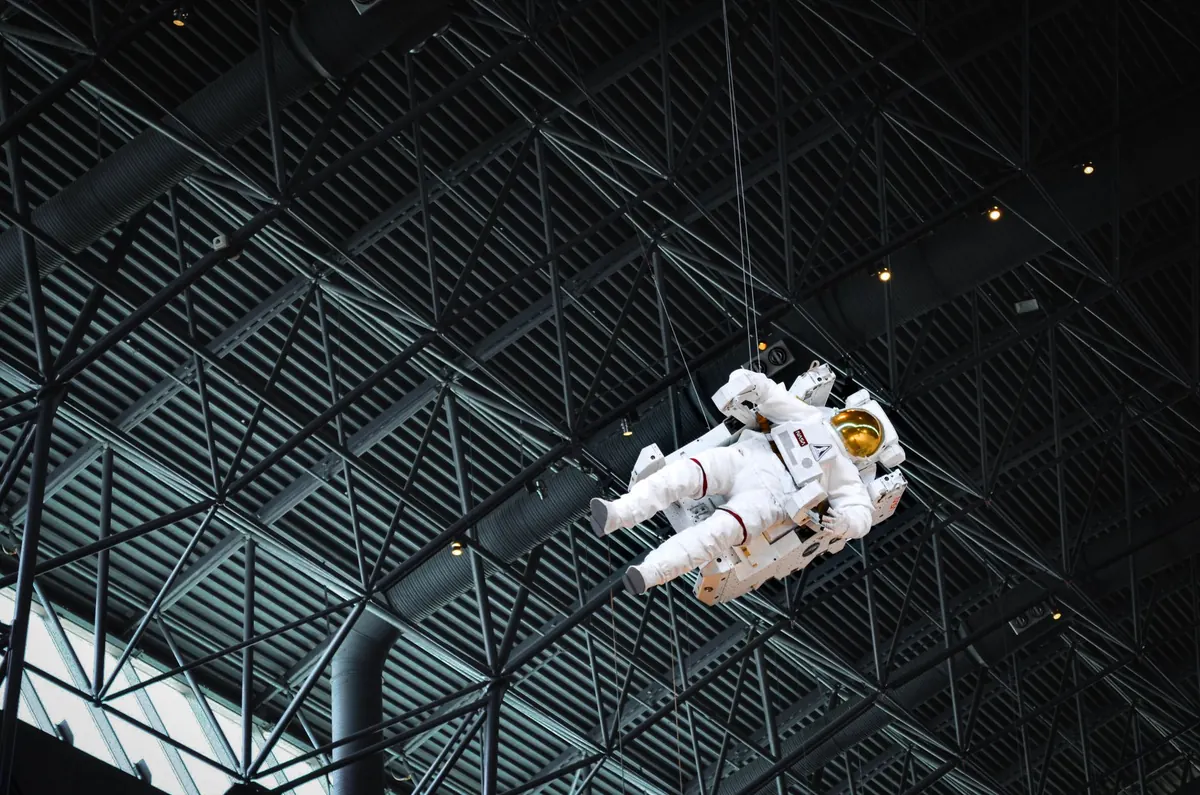
EXCERPT: Weightlessness reshapes bones, muscles, eyesight
Space looks quiet and empty, but for the human body it is a relentless challenge. Every system in us evolved under Earth’s gravity, with a predictable day-night cycle, a protective atmosphere, and a magnetic field that shields us from much of the radiation streaming through the cosmos. When astronauts leave that environment, their bodies begin to adapt in ways that are fascinating, useful, and sometimes dangerous. This guide explains what happens to the human body in space, from the first few hours of weightlessness to the long-term risks of a mission to Mars.
In microgravity, fluids no longer pool in the legs. Blood and tissue fluid shift upward toward the head and chest. Astronauts often develop a puffy face, bulging neck veins, nasal congestion, and thinner legs, sometimes called “bird legs.” The kidneys sense this extra fluid and produce more urine, which reduces total blood volume. That is one reason astronauts can feel dizzy or lightheaded early in a mission.
The inner ear, which helps control balance, also expects gravity. Without it, the brain receives conflicting signals from the eyes, muscles, and vestibular system. The result is space motion sickness: nausea, vomiting, headache, and a general feeling of malaise. It usually hits in the first two or three days. Many astronauts take medication, and most adapt. But when they return to Earth, the same confusion can happen again, because the brain must relearn how to interpret gravity.
Bone is living tissue. Special cells called osteoblasts build new bone, while osteoclasts break old bone down. Mechanical loading, such as walking, running, and lifting, tells the body to keep bones strong. In microgravity, weight-bearing bones are no longer loaded, so resorption outpaces formation. NASA research shows that astronauts can lose about 1 to 1.5 percent of bone mineral density per month in the hip and spine. That is roughly ten times faster than the bone loss seen in postmenopausal osteoporosis.
The bones most affected are the femoral neck, lumbar vertebrae, and heel. Over a six-month mission, an astronaut may lose a significant fraction of bone strength. This increases the risk of fractures, and some structural changes may never fully reverse. Bone loss is especially troubling for long missions, because a broken bone in deep space could be a medical emergency.
Bone is not a static scaffold; it is a budget. In space, withdrawals exceed deposits.
Muscles follow the same “use it or lose it” rule. The anti-gravity muscles, including the calves, quadriceps, hamstrings, glutes, and spinal extensors, do much less work when floating. In long-duration flights, astronauts can lose 20 percent or more of muscle mass in load-bearing areas, and strength can decline even faster. Back pain is common, partly because the spine stretches and the supporting muscles weaken. Astronauts often grow one to two inches taller temporarily as spinal discs expand, but that gain comes with discomfort and a higher risk of disc problems after return.
Exercise helps, but it does not fully prevent loss. Muscles need resistance and gravity-like loading to stay strong. Without it, simple movements on Earth, such as standing up or climbing stairs, can feel exhausting after landing.
The heart is a muscle, and in space it does not have to pump blood uphill against gravity. The left ventricle may shrink, and blood volume can drop by 10 to 15 percent within days. The cardiovascular system becomes deconditioned. When astronauts return to Earth, blood can pool in the legs when they stand. The brain gets less blood, causing orthostatic intolerance: dizziness, a racing heart, and sometimes fainting. Some astronauts cannot stand for ten minutes right after landing and must be carried from the capsule.
This is not just a temporary inconvenience. It shows how deeply the body depends on gravity to regulate blood pressure and circulation. Countermeasures such as fluid loading, salt tablets, compression garments, and lower-body negative pressure suits are used to reduce the risk.
One of the most surprising effects of spaceflight is vision change. Known as Spaceflight-Associated Neuro-ocular Syndrome, or SANS, it occurs when fluid shifts upward and increases pressure around the brain and eyes. Astronauts may develop swelling of the optic nerve, flattening of the back of the eye, folds in the choroid layer, and a hyperopic shift that makes it harder to see things up close. Some need glasses for the first time. The cause is not fully understood, but it may involve cerebrospinal fluid, carbon dioxide levels, and individual genetics.
The brain also adapts. It reorients how it interprets balance and spatial information. Some astronauts show structural changes in the brain after long missions. These changes may affect coordination and reaction time, and they are an active area of research.
On the International Space Station, Earth’s magnetic field still provides some protection. Beyond low Earth orbit, astronauts face galactic cosmic rays and solar energetic particles. These can damage DNA, increase cancer risk, cause cataracts, and possibly affect the central nervous system. A mission to Mars could expose astronauts to radiation levels far beyond what is allowed for workers on Earth. Radiation is one of the biggest obstacles to deep-space travel, and it cannot be solved by exercise alone.
The immune system becomes dysregulated in space. T-cells may work less effectively, and latent viruses such as Epstein-Barr and cytomegalovirus can reactivate. Astronauts may experience skin rashes, minor infections, or allergic reactions. Sleep is also disrupted by the 90-minute day-night cycle, noise, and cramped quarters. Chronic sleep loss can worsen mood, performance, and immune function.
Psychology matters too. Isolation, confinement, monotony, and distance from family can create stress. Crews must live and work together in tight spaces for months. NASA studies behavioral health carefully, because a mission to Mars will require people to manage conflict and mental fatigue without immediate help from Earth.
Astronauts do not simply endure these changes. They use a range of countermeasures to protect their bodies.
Coming home is its own shock. Astronauts must relearn how to walk, balance, and regulate blood pressure. Many need weeks or months of rehabilitation. Muscle strength often returns within weeks to months, but bone recovery can take years, and some loss may be permanent. Vision changes may persist. Sleep and immune function usually improve, but the body remembers the mission.
Returning to Earth is not the end of the mission; it is the beginning of recovery.
Studying astronauts helps people on Earth. Research on bone loss informs treatments for osteoporosis. Studies of muscle atrophy help patients on prolonged bed rest. Work on balance and blood pressure supports aging adults and people with neurological conditions. In the future, artificial gravity, better shielding, and advanced medical tools may make long missions safer. But for now, the human body remains beautifully adapted to Earth and only partially adaptable to space.
Weightlessness reshapes bones, muscles, eyesight, the heart, the immune system, and even the brain. Astronauts are resilient, and modern countermeasures make spaceflight possible, but the body never truly stops missing gravity. Understanding these changes is essential for protecting astronauts on the International Space Station, for future missions to the Moon and Mars, and for improving health for everyone who stays on Earth.
Photo: Eleanore Stohner / Pexels
A practical guide to finding a UK astronomy club, what happens at meetings and star parties, and how to...
The northern lights are rare from Britain but not impossible. Here's how forecasts, dark-sky sites and...
A practical first-night guide to assembling, aligning and focusing a new telescope, with a checklist to...