Community Astronomy Clubs in the UK: How to Find One and What to Expect
A practical guide to finding a UK astronomy club, what happens at meetings and star parties, and how to...

Ask most people what they remember about humans on the Moon, and you will get Apollo: grainy footage, a flag, a golf swing. What happened afterwards is less famous. Nobody has walked on the lunar surface since 1972. Artemis is the programme meant to change that, and it is already underway — uncrewed test flights have flown, and crews are in training. It is also widely misread as Apollo with better cameras. It is closer to a rehearsal for Mars, run a few days from home.
Artemis is NASA's human lunar exploration programme, run with international partners and a growing set of commercial contractors. Two goals sit side by side, and they are easy to confuse.
The first is to put people back on the Moon, including near the south pole, in places Apollo never visited. The second is to stay. That means habitats, power, rovers, communications and resupply — the unglamorous machinery that turns a visit into a presence.
It is not a NASA-only effort. The European Space Agency builds the service module that powers Orion, the crew capsule, supplying its electricity, propulsion and life-support consumables. Canada contributes robotics; Japan contributes cargo and pressurised modules. Britain's involvement runs through ESA membership and the contracts that follow.
Artemis is built as a sequence, and it helps to know which step is which.
Treat every published date as an intention, not a promise. Spaceflight schedules have always worked this way, and programmes that depend on brand-new vehicles slip.
The SLS is the heavy-lift rocket that sends Orion on its way. It is powerful, it is expensive, and it flies rarely. Whether it remains the long-term answer, or commercial rockets take over, is one of the genuinely open questions in the programme.
Orion is the crew vehicle: a capsule for four, with a service module from ESA providing power, propulsion, air and water. It is built for deep space rather than the short hops to the International Space Station, which means more radiation protection and far more heat shielding for the return.
The vehicle that actually touches down is being built commercially. SpaceX's Starship variant is contracted for the first crewed landing, with Blue Origin's Blue Moon planned for a later mission. NASA buys the landing as a service rather than owning the hardware. That keeps costs down but hands a good deal of schedule control to someone else.
A small station in orbit around the Moon, assembled from modules contributed by several space agencies. It gives crews somewhere to dock, work and stage from, and it keeps international partners invested in a programme that would otherwise be largely American.
Apollo landed near the equator, where sunlight is predictable and the terrain is relatively forgiving. The south pole is harder, and worth it.
The trade-off is real. Long shadows make landing hazardous, temperatures swing dramatically, and the dust — sharp, abrasive and electrostatically clingy — gets into everything. Designing for the south pole means designing for the hardest place you can sensibly reach.
Nothing about Mars is easy, and the Moon is a workshop for the difficult parts.
Distance is the obvious one. The Moon is a few days away; Mars is months each way, with a light-delay of minutes rather than seconds. Crews cannot be talked through a repair by a team on the ground. They have to be self-reliant, and the only way to learn what that demands is to practise somewhere closer.
Health is the second. Beyond Earth's magnetic field, crews face galactic cosmic radiation that no current shielding solves cheaply. Bone and muscle loss, immune changes and the psychology of confinement are studied on the space station, and will be studied further on the Moon.
Third, there is the plumbing of survival: closing the loop on water and air, growing food, using local material instead of hauling everything from Earth, and setting a large vehicle down on a surface with no runway and no second attempt.
Lunar missions let engineers get these things wrong in a place where getting them wrong is survivable. A Mars programme built without that experience would be guessing.
Artemis is not guaranteed. It survives on budgets that change with politics, it depends on vehicles still in development, and its most ambitious promises — a base, resource extraction, a permanent presence — are many years of work at best. Some of what is announced as a plan is really an ambition. Worth remembering when a headline suggests the Moon is about to be settled.
If you would rather watch this unfold than read about it afterwards:
Artemis rewards close attention, but on its own terms: a slow, expensive, genuinely difficult attempt to make living beyond Earth ordinary. The interesting part was never the flag. It is what comes afterwards.
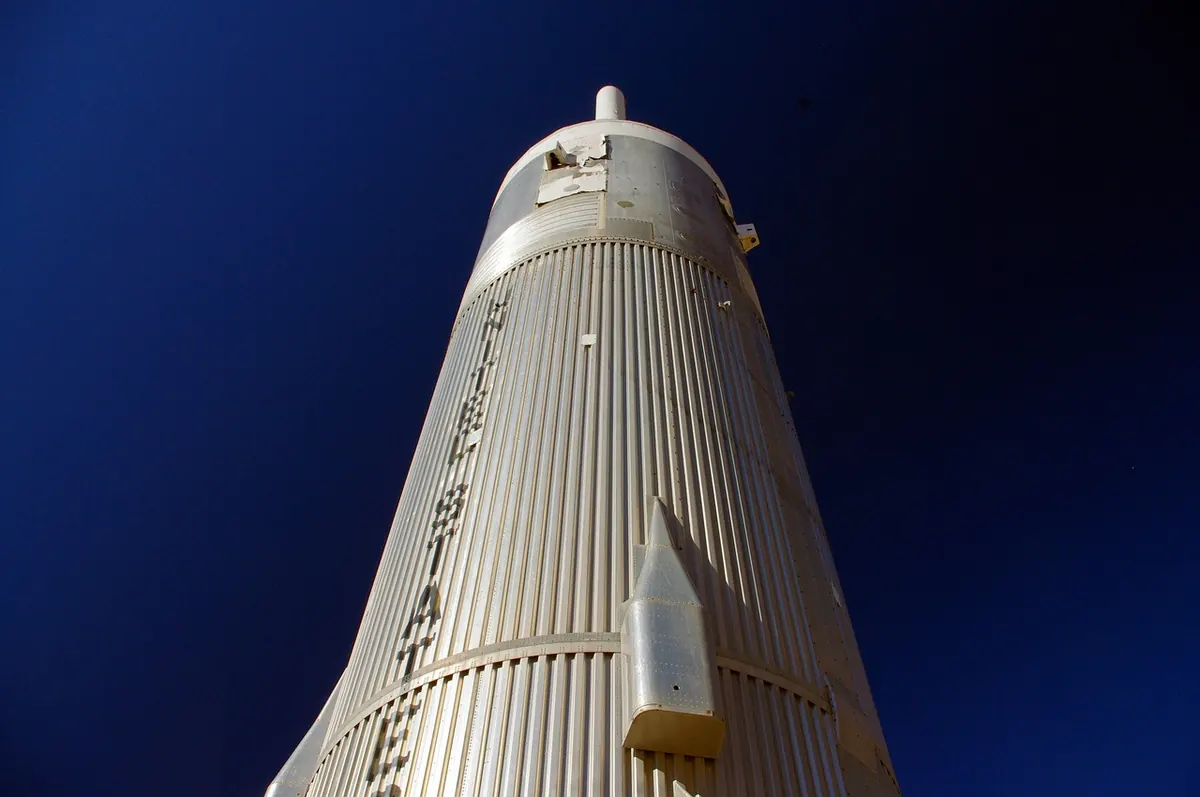
Photo: MikeGoad / Pixabay
A practical guide to finding a UK astronomy club, what happens at meetings and star parties, and how to...
The northern lights are rare from Britain but not impossible. Here's how forecasts, dark-sky sites and...
A practical first-night guide to assembling, aligning and focusing a new telescope, with a checklist to...